
Who are Business Consultants?
Both the thrill of the unknown and the subsequent roadblocks that arise catch most first-time founders off guard. Building a business strategy, managing the finances, and hiring the right people—every step you take in a competitive market can make or break your startup’s future. Passion and innovation alone won’t get you there. But a sustainable business? That’s a different story. This is where business consultants come into play. With industry experience and an outside, pragmatic perspective, business consultants help startups make the right choices. Starting a new venture? Preparing for funding? Expanding your business?
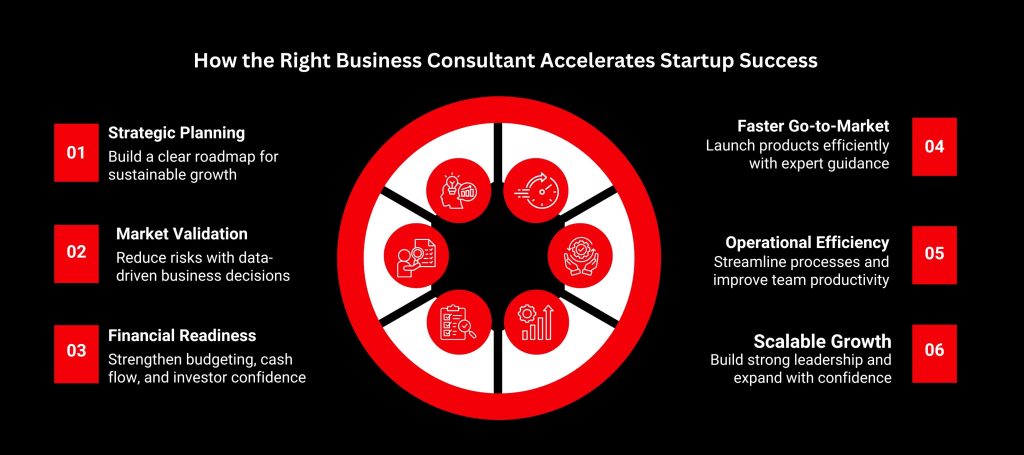
Business consultants are more than problem solvers. They are the go-to people for founders when it comes time to address big-picture challenges and set their companies up for real success. They don’t just do the job and leave, like freelancers or outsourced teams would. Instead, they roll up their sleeves and dig in with leadership, helping to shape everything from strategy to operations. Some help founders figure out what their business is actually about, how they fit into the market, and how to scale for the long haul. Others dive into the numbers, tightening budgets, managing cash flow, and prepping the business for investors.
Why do companies need business consultants?
There comes a time when just relying on what your team knows isn’t enough to crack tough problems. That’s where business consultants really add value. One of the biggest advantages of working with consultants is gaining access to their niche knowledge. Startups typically do not have large teams or financial resources to hire experts in every domain internally. Consultants bridge these gaps, rendering the requisite expertise without entailing long-term payroll obligations. They also help you avoid costly mistakes. Whether you’re entering a new market, trying to raise money, launching a product, or looking to make your operations run smoother, consultants bring hands-on experience, real strategies, and a clear plan. That saves you from making beginner mistakes. Consultants don’t just bring data; they know how to cut through the noise, analyze what matters, and come back with real solutions. That kind of advice builds your confidence, and, honestly, it reassures investors, too. When your strategy is sharp and your growth plan is solid, you look a lot more appealing to anyone thinking about backing your business.
Why Startups Prioritize Consultant Partnerships
Startups aren’t like big companies. They deal with constant uncertainty and smaller budgets and have to make decisions fast. Founders juggle everything, developing the product, getting it in front of customers, selling, running operations, hiring people, and finding investors, all at once. Honestly, it’s exhausting. Bringing a business consultant on board can really lighten that load. But it’s more than quick fixes. These consultants step in as strategic partners. They help founders test new ideas, spot gaps in the market, sharpen how they launch their products, and prepare for those all-important investor meetings.
Another major plus? Consultants keep founders honest. Founders have a practical roadmap with clear milestones, instead of always scrambling to put out fires. It’s about moving the business forward, not just reacting. As the startup begins to scale, consultants stay on. They make things run smoother, help build stronger leadership, streamline operations, and find new ways to make money. This ongoing partnership allows founders to focus on what really matters: innovating and making smart moves, while experienced advisors take care of the strategy.
How do I choose the right business consultant for my startup?
Choosing the right business consultant is more than just checking credentials or comparing fees. When assessing consultants, founders need to look at their ability to address real business problems.
- First, check their industry experience. Seek out consultants who have experience working with startups or companies in similar industries. Experience that is relevant often results in quicker solutions to problems and practical recommendations.
- Second, know how they approach it. Good consultants ask intelligent questions before they offer solutions. They don’t offer generic advice but take the time to understand your business objectives, challenges, financial position, and long-term vision.
- Third, ask for client references or case studies. The winning consultant needs to be able to show measurable business outcomes from past projects. Real examples give us confidence that they can deliver results.
- Fourth, clearly define the scope of work. Before you sign any agreement, lay out timelines, deliverables, responsibilities, reporting structures, and success metrics. Set expectations so you don’t get surprises later.
- Communication is equally important. Your consultant should explain complex business concepts in simple language, respond promptly, and remain accessible throughout the engagement.
Finally, evaluate pricing carefully. The cheapest consultant is not always the best choice, and the most expensive one may not provide proportional value. Focus on expertise, measurable outcomes, and long-term business impact rather than price alone.
Table of Services & Advantages Business Consultants Provide
Business Consulting Service | Advantage for Startups |
Business Strategy & Planning | Defines a clear roadmap for sustainable growth |
Market Research | Identifies customer demand and competitive opportunities |
Financial Planning | Improves budgeting, cash flow, and investor readiness |
Go-to-Market Strategy | Accelerates product launches and customer acquisition |
Operational Improvement | Streamlines workflows and increases productivity |
Organizational Design | Helps build scalable teams and leadership structures |
Fundraising Support | Strengthens investor presentations and financial planning |
Business Expansion Strategy | Supports market entry and long-term scalability |
Early Precautions That Must be Taken
Before you bring a business consultant on board, you’ve got to be careful:
- First off, steer clear of any consultant who promises the moon, guaranteed success, or overnight growth. That’s just not how real business works. Lasting results take real effort and smart planning.
- Make sure you get everything in writing. That means laying out exactly what you expect: project goals, timelines, deliverables, payment details, how you’ll handle confidentiality, and even what happens if you want to walk away. Skip this step and you’re just asking for trouble.
- Check their background, too. Dig into customer testimonials, look through LinkedIn recommendations, or ask for case studies. Don’t be shy; ask if they’ve worked with companies at your stage. Experience matters.
- If a consultant starts pitching solutions before they’ve listened closely and dug into your business, that’s a red flag; deeper studies and research evaluation is the key.
Conclusion: Finding your Desired Business Consultant
Picking the right business consultant is a big deal; it sets the tone for your whole business journey. Great consultants don’t only advise; they partner with you. They guide you through making sense of the unknown, identifying untapped markets, improving your workings, and setting you up for future success. Define your needs before selecting. When you invest in a solid consulting relationship, you’re not just buying advice; you’re getting confidence, direction, and a plan to build a business that lasts and grows.