
Sustainable business growth requires more than ambition or market presence. It demands structured thinking, disciplined execution, and long-range decision-making. Organizations that grow responsibly rely on strategic management advisors to guide leadership through complexity, uncertainty, and transformation. These advisors act as architects of progress, ensuring growth aligns with financial stability, market relevance, and organizational purpose.
Strategic management advisors support leadership teams by translating vision into actionable frameworks. Their role extends beyond planning; they help businesses anticipate disruption, allocate resources wisely, and maintain competitive advantage across evolving landscapes.
Role of Strategic Management Advisors
Strategic management advisors operate at the intersection of leadership, analytics, and execution. They assess organizational capabilities, competitive positioning, and external pressures to design growth strategies that remain resilient over time.
Their guidance often addresses critical questions:
- Which markets offer scalable opportunities?
- How should resources support long-term objectives?
- What risks threaten sustainable expansion?
- How can leadership decisions support adaptability?
By addressing these questions systematically, advisors prevent reactive decision-making and promote structured growth.
Sustainable Growth as a Strategic Priority
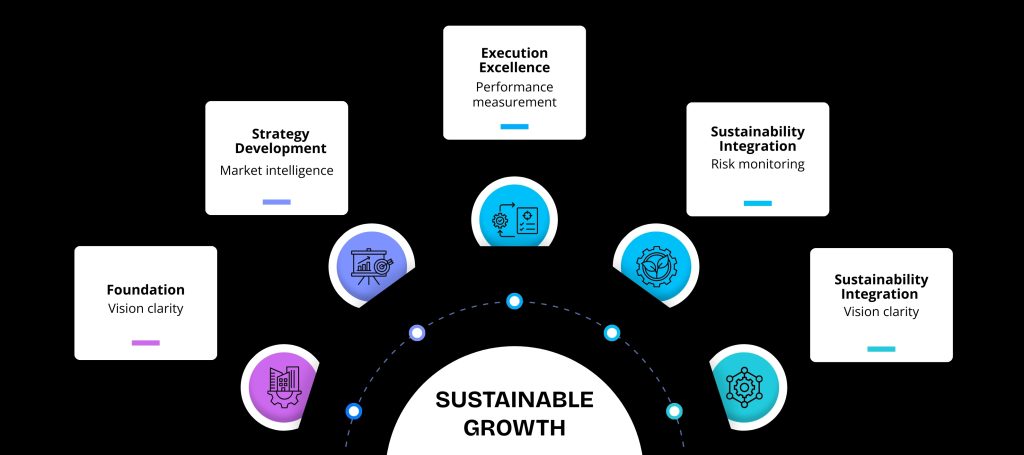
Growth without sustainability leads to operational strain, cultural breakdown, and financial risk. Sustainable growth emphasizes consistency, scalability, and resilience. Strategic advisors embed sustainability across planning frameworks by integrating financial health, environmental responsibility, and workforce development.
Businesses guided by strategic advisors often adopt adaptive models capable of responding to market shifts without sacrificing stability. Such models prioritize value creation over short-term gains, supporting stronger stakeholder trust and long-term relevance.
Core Services Offered by Strategic Management Advisors
Strategic advisors provide tailored services based on organizational maturity, industry conditions, and leadership goals. Their involvement may range from high-level strategy formulation to hands-on execution support.
Key Advisory Areas
Advisory Area | Purpose | Business Impact |
Corporate Strategy Development | Defines long-term direction and priorities | Stronger decision clarity and alignment |
Market Expansion Planning | Identifies scalable opportunities | Reduced risk during growth phases |
Organizational Design | Aligns structure with strategy | Improved efficiency and accountability |
Risk Management Strategy | Anticipates financial and operational threats | Greater resilience and compliance |
Performance Measurement | Tracks progress against objectives | Data-driven leadership decisions |
This structured approach ensures growth remains intentional rather than accidental.
Strategic Advisors as Change Enablers
Change remains unavoidable across modern business environments. Strategic management advisors function as neutral partners who guide transformation without internal bias. They support leadership during mergers, digital transitions, governance updates, or cultural realignment.
Their external perspective often reveals blind spots that internal teams overlook. By introducing tested frameworks and scenario planning, advisors reduce resistance and increase adoption across the organization.
Data-Driven Strategy for Long-Term Value
Strategic decisions rooted purely in intuition carry risk. Advisors strengthen strategy through data interpretation, market intelligence, and performance analytics. They transform complex information into practical insights that guide leadership action.
Such data-driven approaches allow organizations to:
- Predict market shifts
- Evaluate investment returns
- Optimize operational processes
- Measure sustainability performance
Through consistent monitoring, advisors help organizations adjust strategy proactively rather than reactively.
Leadership Alignment and Governance Support
Sustainable growth requires alignment across executive leadership, boards, and operational teams. Strategic management advisors facilitate alignment by clarifying roles, responsibilities, and accountability structures.
They also support governance frameworks that reinforce ethical leadership, regulatory compliance, and transparent reporting. Strong governance builds investor confidence and reinforces long-term credibility.
Conclusion
Strategic management advisors empower organizations to pursue growth without compromising stability or purpose. Through disciplined planning, risk awareness, and leadership alignment, businesses gain the foundation required for enduring success. Sustainable growth emerges when strategy receives expert guidance, consistent execution, and a commitment to long-term value creation.